Outcome, constraints, stakeholders, current evidence

Sensewaves Global Technologies
Cloud, AI, and business systems. Engineered together.
We design Azure estates, production AI, hospital platforms, enterprise workflows, and Lineage, our Azure intelligence product. From first architecture to migration, proof, and customer ownership.
One technology practice
Architecture · Platforms · Products · Data · Security · Delivery
The Swaves portfolio
Different entry points. One engineering practice.
Start with the technology, product, or business process that carries the constraint. Each area has a distinct scope and identity; the advantage is that architecture, data, security, delivery, and handover do not become separate conversations.
Azure engineering
Shape the Azure estate, then move the right workloads into it.
Strategy, landing zones, hybrid connectivity, migration, cloud-native platforms, governance, security, FinOps, reliability, and managed Azure services.
Explore Sense CloudTechnical scope
- 01Landing zones and platform engineering
- 02VMware, Hyper-V, application and data migration
- 03Network, identity, policy, Defender and Sentinel
- 04FinOps, resilience and managed services
What remains visible
Architecture, implementation, validation, runbooks, and a clear ownership model.
Designed across boundaries
The difficult part is rarely one service or one screen.
A cloud migration changes identity, network, cost, recovery, and the application. An AI workflow depends on data authority, permissions, evaluation, and support. A health or ERP rollout succeeds only when roles, interfaces, migration, and business control agree.
Swaves brings those dependencies into the same technical design before they become late project surprises.
Interactive system view01 / 04
Workload transition
Move the workload without losing the operating model.
The target platform, identity, network, recovery, cost controls, and cutover evidence move as one design.Inputs
Workload estate
Dependency map
Recovery targets
Swaves engineering boundary
Landing zoneIdentityHybrid networkFinOps
OutcomeOperable Azure platformMigration waves, tested rollback, monitoring, ownership, and runbooks
Where teams bring us in
Concrete work, from foundation to business system.
Built by Swaves
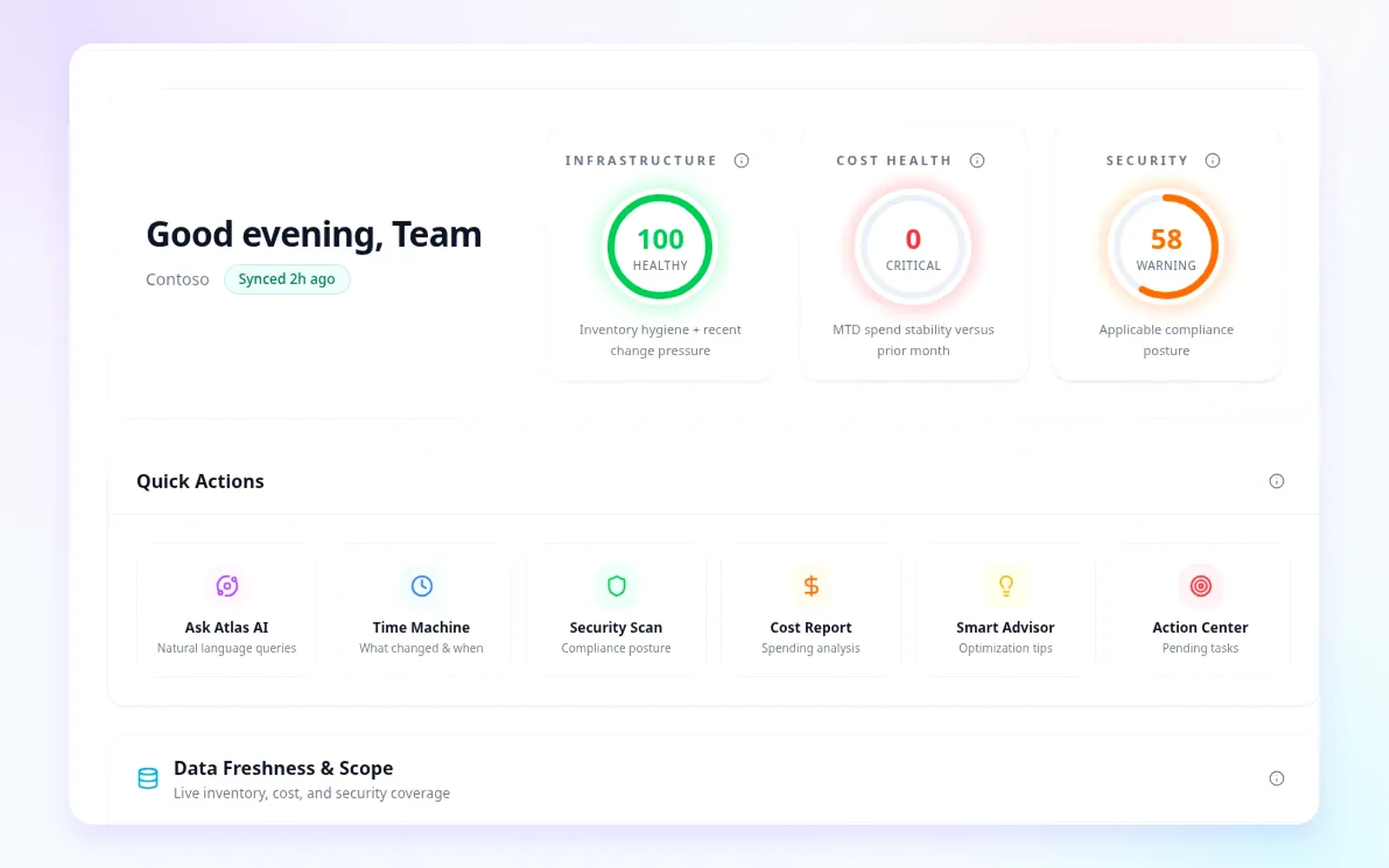
Lineage gives changing Azure estates a memory.
Inventory shows what exists now. Lineage adds the time, cost, identity, risk, recommendation, and action context needed to understand how the estate reached that state and what deserves attention next.
- Compare infrastructure state over time
- Connect cost movement to resource context
- Investigate through Atlas AI and source-linked views
- Carry findings into accountable work and reports
Lineage · Azure infrastructure intelligenceLive context
A complete path
Design the destination, the proof, and the handover together.
Every engagement is different, but incomplete transitions fail in familiar places. The path below keeps technical decisions and customer ownership connected from the first brief.
Target state, boundaries, trade-offs, ownership
Platforms, integrations, automation, controls
Tests, migration rehearsals, evaluation, recovery
Cutover, documentation, access, runbooks
Reliability, cost, security, adoption, roadmap
What good work leaves behind
Engineering quality should be visible after the project team leaves.
Reliability, security, cost, performance, and supportability are design constraints, not a final review. The same is true for data quality, responsible AI, documentation, and customer control.
Identity, least privilege, threat controls, and incident paths.
Failure modes, recovery targets, observability, and rehearsals.
Source authority, migration quality, retention, and boundaries.
Decisions, tests, approvals, and ownership remain reviewable.
Evaluation, safeguards, limitations, and human authority.
Customer access, documentation, support, and an exit path.
Start with the real constraint
Bring the estate, workflow, system, or question.
We will help define the technical scope, dependencies, proof, ownership, and the smallest sensible first move.
Before the first conversation
How the portfolio fits together.
Is Swaves a cloud consultancy or a software company?
Both, with clear boundaries. Sense Cloud and the specialist services are engineering practices. Lineage is our Azure intelligence product. Sense Health and Sense ERP are business-system portfolios delivered through product configuration, integration, migration, and services. Sense AI covers advisory and production AI systems, while Sense Labs is the bounded public experimentation surface.
Can an engagement start with one specific problem?
Yes. A migration wave, a landing-zone gap, an AI workflow, a hospital process, an ERP hand-off, a security concern, or one recurring Azure review can be a valid starting point. The initial scope should expose dependencies and decisions without forcing a broad transformation program.
Do customers have to use Lineage?
No. Lineage is a distinct product, not a requirement for Sense Cloud or other Swaves services. It is useful when a team needs a persistent way to investigate Azure change, cost, identity, risk, recommendations, and follow-up work.
How do you approach production AI?
We begin with the workflow, users, source authority, permissions, risk, human decisions, evaluation data, failure behavior, and service owner. Model and platform choices follow those requirements rather than leading them.
What should exist at handover?
The exact package depends on scope, but it should normally include the implemented system, architecture and configuration records, access and ownership, validation evidence, migration or release records, monitoring, recovery procedures, runbooks, known limits, and an agreed improvement backlog.