Synthesize
Bring related signals into a concise review narrative.
Atlas AI
AI assistance is useful when evidence, boundaries, and review remain visible.
Ask operational questions, synthesize available context, and draft next steps while keeping write-class actions in separate governed paths.
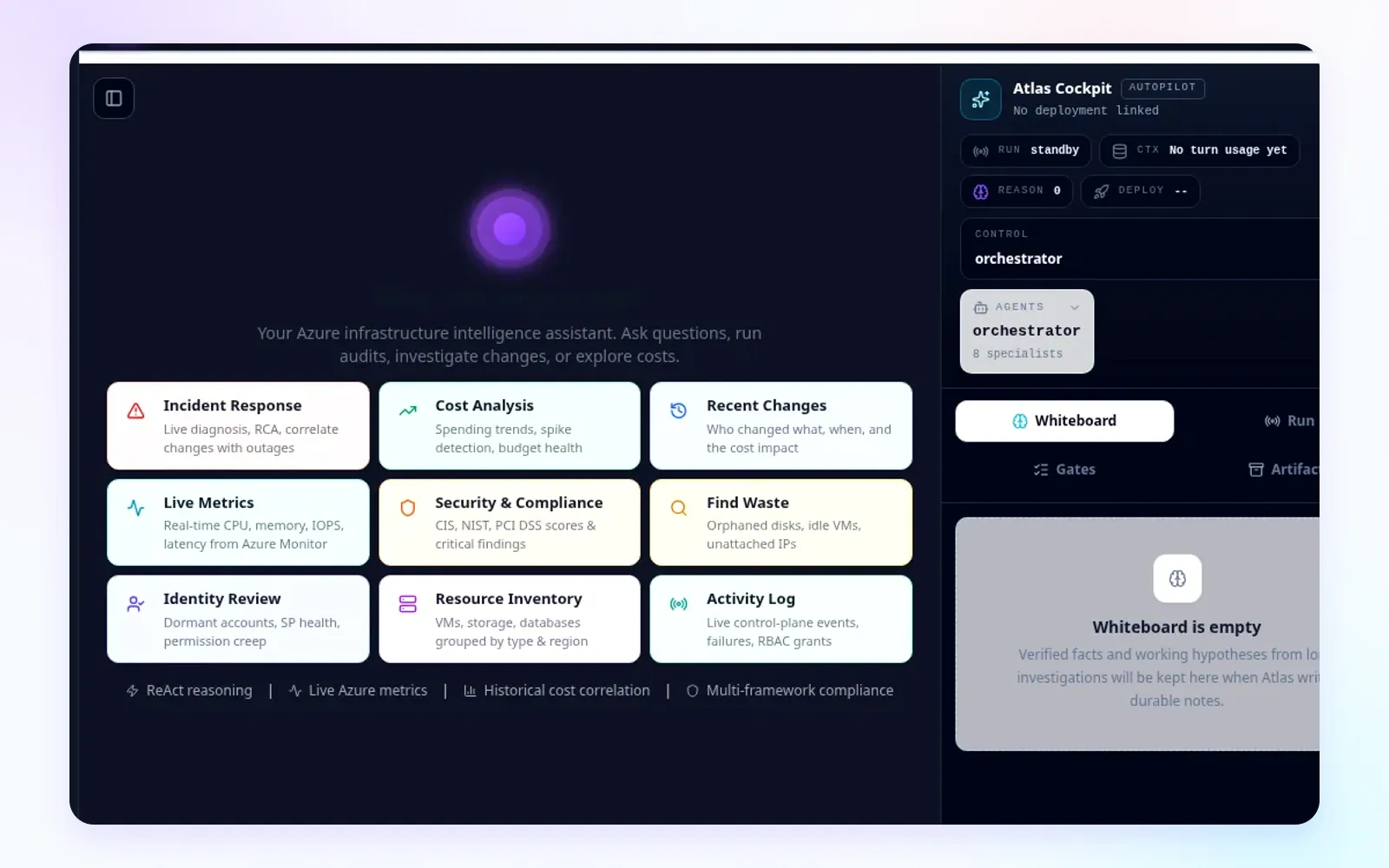
Atlas AI assists operators; it can be incomplete or wrong and its output requires review. Available grounding, model routing, data handling, and advanced action controls depend on the configured customer environment.
Ask with context
Operating practiceAtlas AI is designed around questions such as what changed, why cost moved, what risk affects a resource, or what should enter a review pack. A defined tenant, scope, and period improves the usefulness of the investigation.
State the decision or uncertainty the operator needs to resolve.
Keep tenant, estate boundary, and time window explicit.
Validate the answer against available product and source evidence.
Product evidence
Implemented capabilityAtlas AI can use available Lineage context from resources, history, cost, risk, activity, recommendations, and workflow records. Coverage is bounded by configured sources, permissions, sync freshness, and the tools available to the session.
Human review
Implemented capabilityAtlas AI can summarize evidence, organize hypotheses, and draft review notes or next-step material. Operators remain responsible for validating facts, source freshness, calculations, and recommendations before decisions are recorded.
Bring related signals into a concise review narrative.
Prepare follow-up questions, action notes, or report material.
Check material claims against the relevant source surfaces.
Governed operations
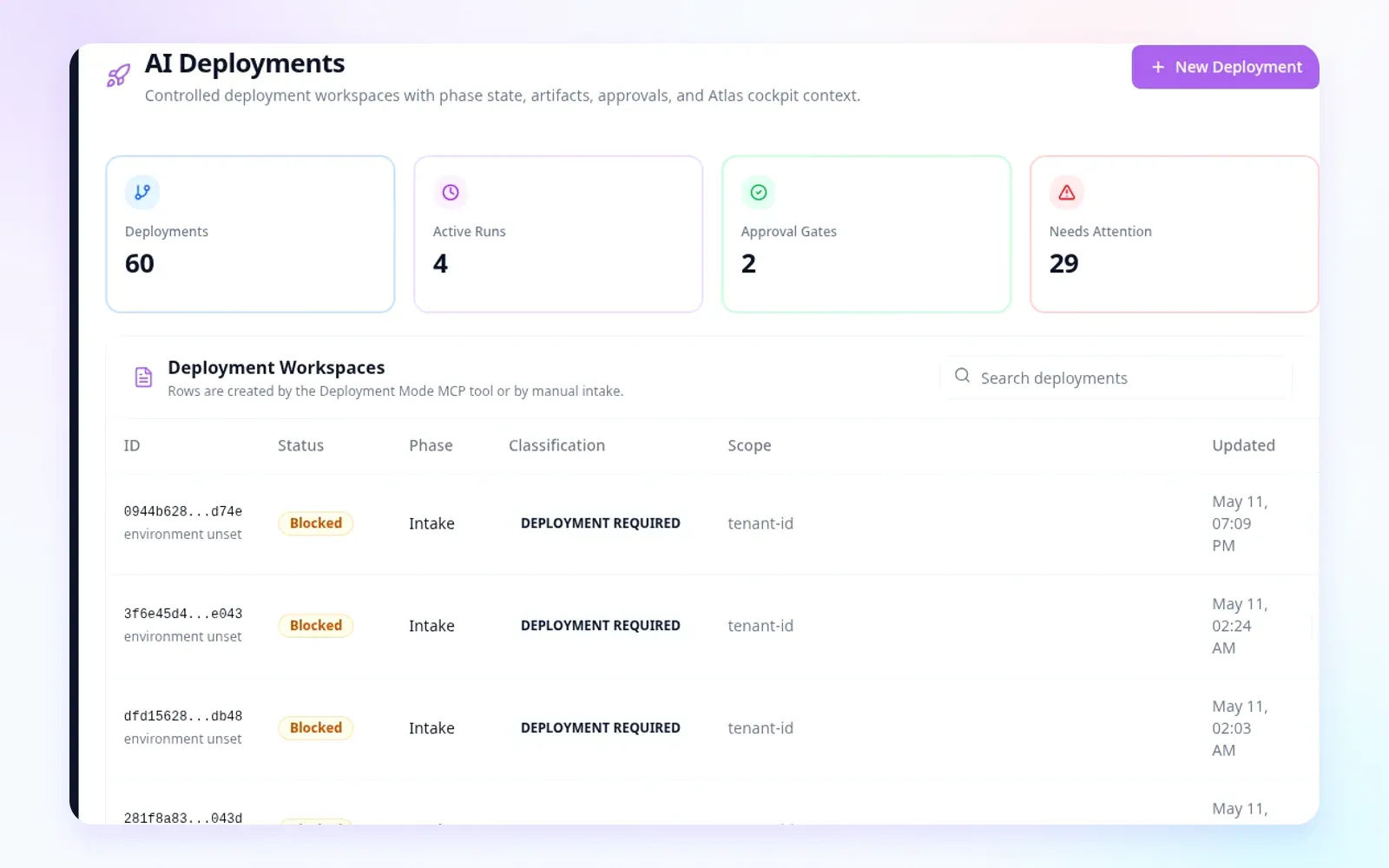
Implemented capabilityWrite-class operations are separate from ordinary Atlas analysis. Where Azure Write or Deployment Mode is enabled, configured identity, Azure RBAC, product permissions, policy checks, approval, execution records, and verification apply.
Known limits
Operating practiceReviewers should inspect sync state, confirm source coverage, avoid placing unsupported secrets in prompts, and validate consequential outputs. Account-specific controls and data handling should be reviewed before broader use.
Check whether relevant data is current, stale, failed, or still synchronizing.
Identify missing sources and permissions before drawing conclusions.
Require human review for decisions and consequential actions.
Service and advisory
Service and advisorySwaves can support use-case framing, evaluation criteria, model-routing review, permission design, and operating controls. No public claim is made here about a customer-specific model, residency outcome, or deployment topology.
Evaluate Lineage
Choose the evidence, question, and acceptance criteria before assessing answer quality or action scope.