Changed fields
Inspect synchronized values before and after the selected window.
Change intelligence
Time Machine turns synchronized Azure state into a reviewable timeline.
Compare snapshots, inspect property movement, retain removed-resource context, and connect state changes to activity and downstream signals.
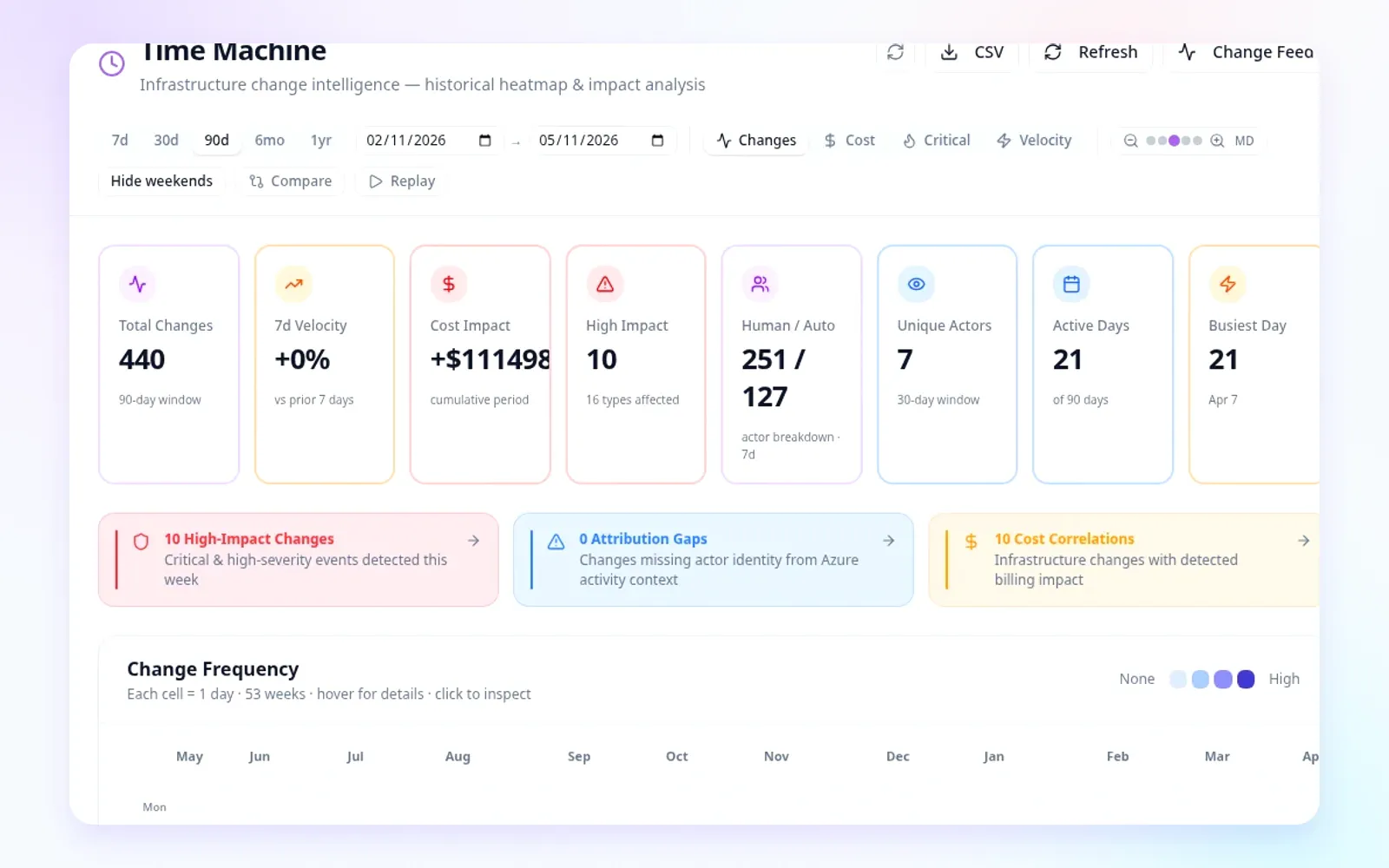
Change intelligence is designed for investigation and review. It helps teams reconstruct synchronized estate movement; it does not claim to replace Azure activity logs, configuration policy, observability, or an infrastructure-as-code source of truth.
Start with a window
Operating practiceA useful change review begins with two retained states and a bounded set of resources. Lineage keeps that review window visible so operators can distinguish synchronized state movement from assumptions about causality.
Choose tenant, subscription, grouping, or resource context.
Select retained points in time that bracket the event.
State the incident, drift, or review hypothesis being tested.
Time Machine
Implemented capabilityThe comparison view summarizes movement between selected snapshots, then lets reviewers narrow into affected resources instead of manually reconciling exports.
Configuration movement
Implemented capabilityResource-level diffs expose synchronized property changes between selected states. Reviewers can focus on the field movement that matters and carry the evidence into a broader incident or governance review.
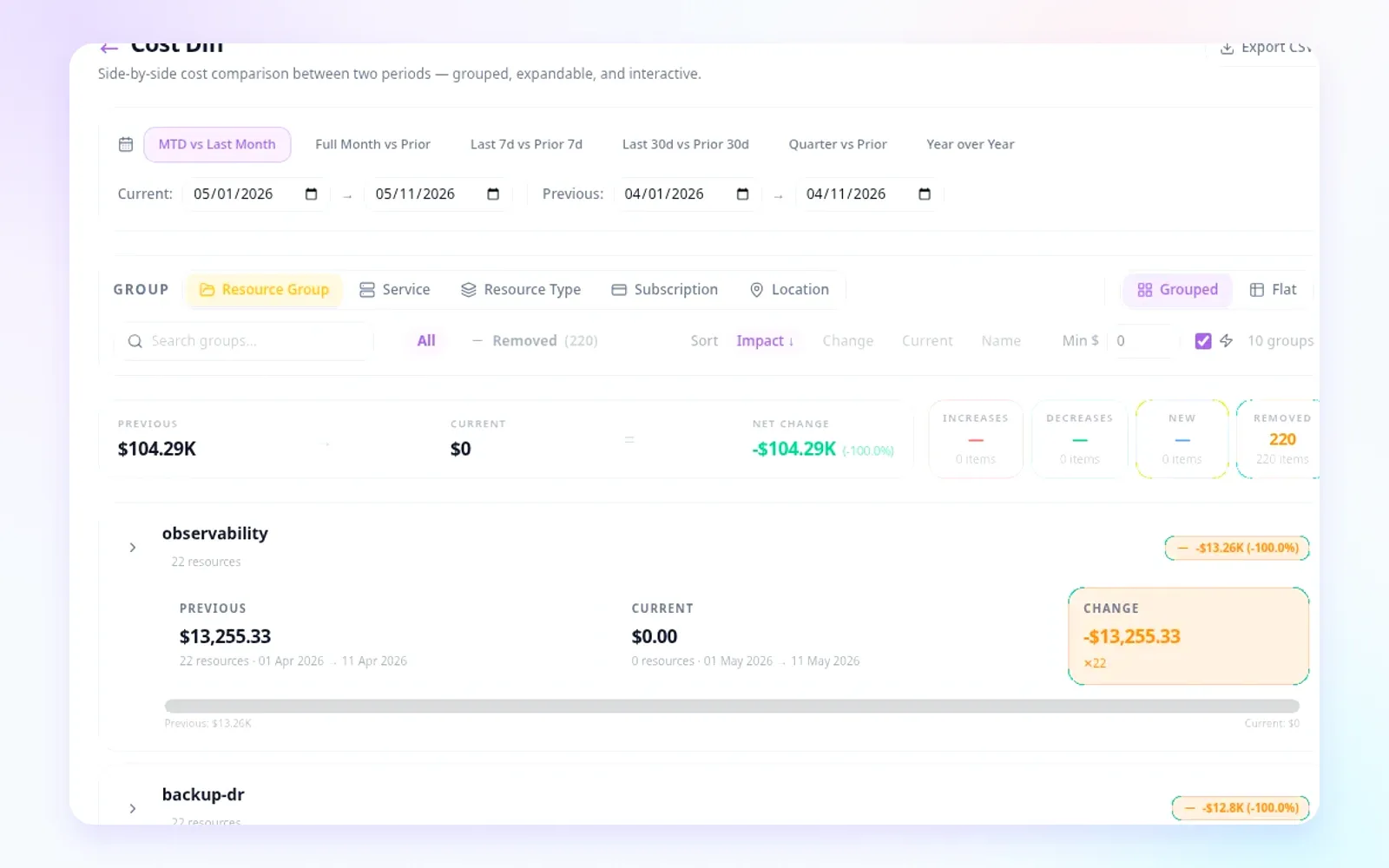
Inspect synchronized values before and after the selected window.
Keep the affected asset in view while reviewing its movement.
Use the diff as supporting context, not automatic proof of cause.
Correlated context
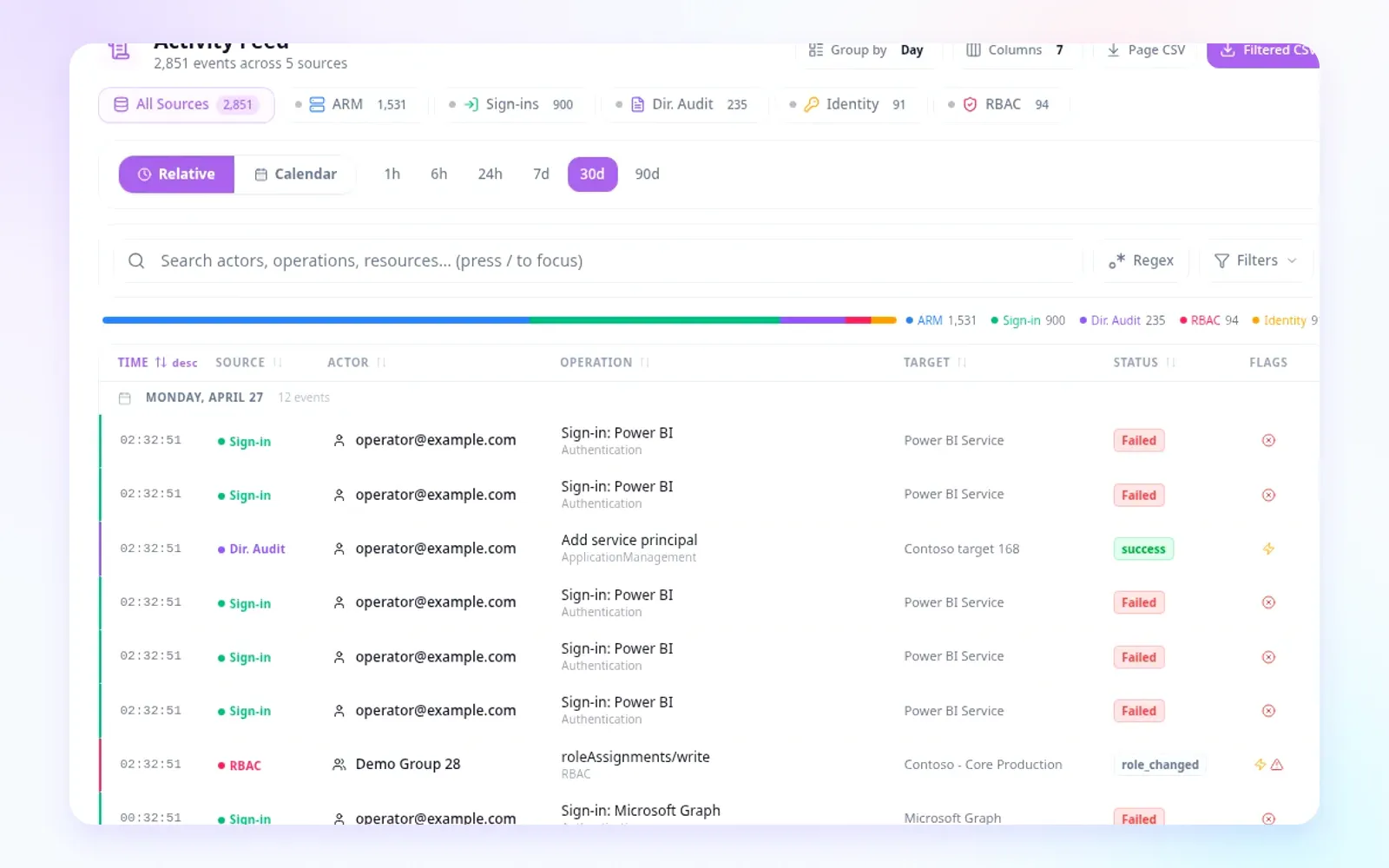
Implemented capabilityTimeline and Activity Feed views help an investigator compare state transitions with available Azure activity records. Identity and automation context can clarify who or what acted when the approved sources provide it.
Connected intelligence
Implemented capabilityFrom a change investigation, operators can examine cost movement, recommendations, threat context, and assigned work. The product connects evidence for review but leaves conclusions and remediation decisions with accountable operators.
Check whether spend movement aligns with the review window.
Review findings and recommendations around affected resources.
Assign follow-up and preserve the decision trail.
Service and advisory
Service and advisorySwaves can facilitate a bounded review, help identify source gaps, and structure the resulting evidence pack. Root-cause conclusions still depend on source quality, retention, and expert validation; the service does not manufacture missing telemetry.
Evaluate Lineage
Use a concrete before-and-after question to evaluate snapshot history, activity context, and review output.