
Review window
Align cost comparison with retained synchronized states.
Cost intelligence
Review spend beside resources, change, ownership, and optimization evidence.
Explore cost by review period and organizational context, then connect movement to the estate instead of stopping at a billing chart.
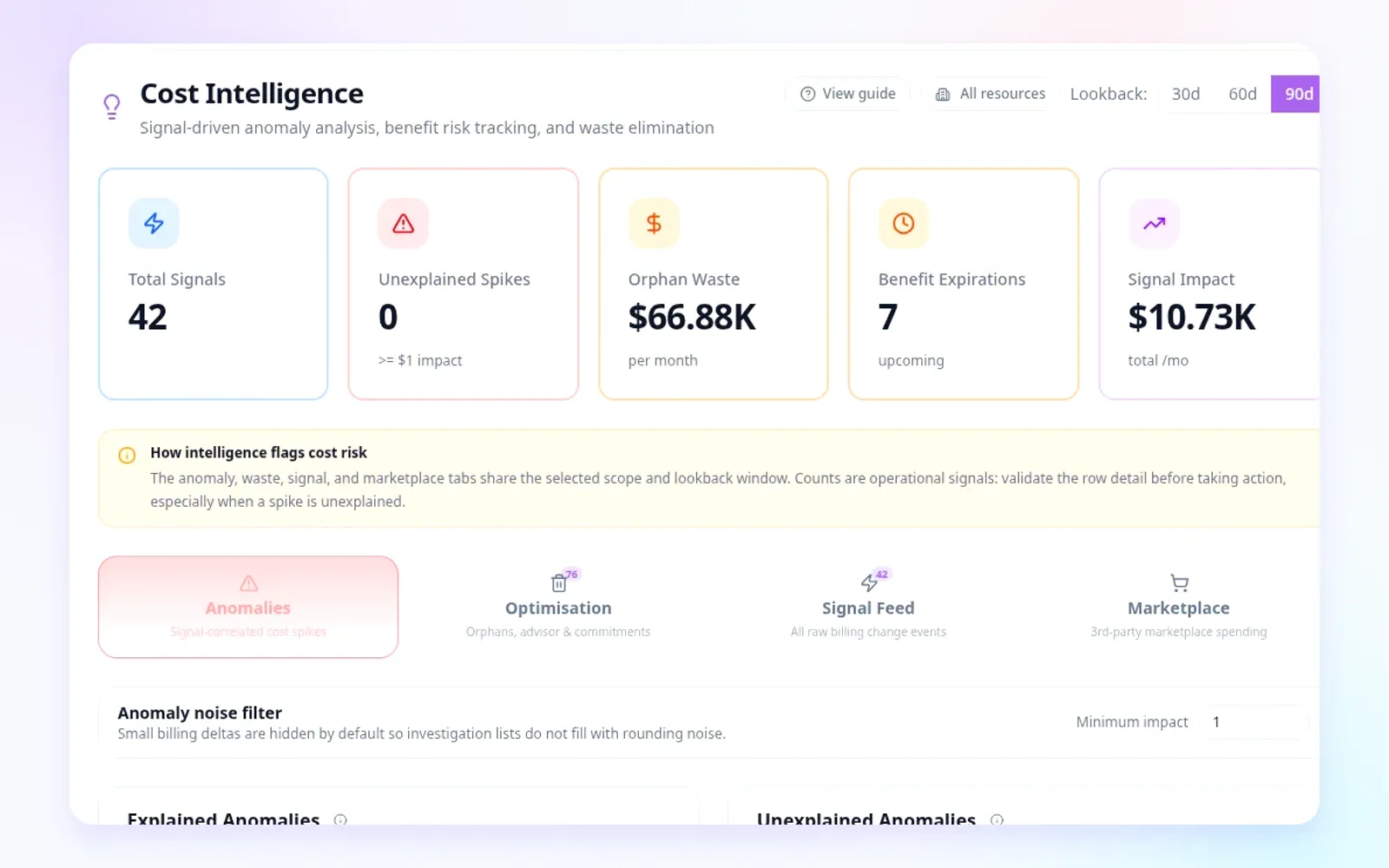
Lineage supports cost investigation and decision preparation. Billing exports and Microsoft cost systems remain authoritative for invoicing; savings outcomes depend on validated usage, pricing, commitments, and customer decisions.
Cost Intelligence
Implemented capabilityCost Intelligence organizes available Azure cost data for operational review. Teams can narrow from a portfolio view into the services, subscriptions, groupings, and resources relevant to a variance question.
Explain movement
Implemented capabilityTime Machine cost diffs place spend movement beside selected estate changes. This supports a stronger hypothesis about what drove a variance while avoiding the claim that correlation alone proves causation.
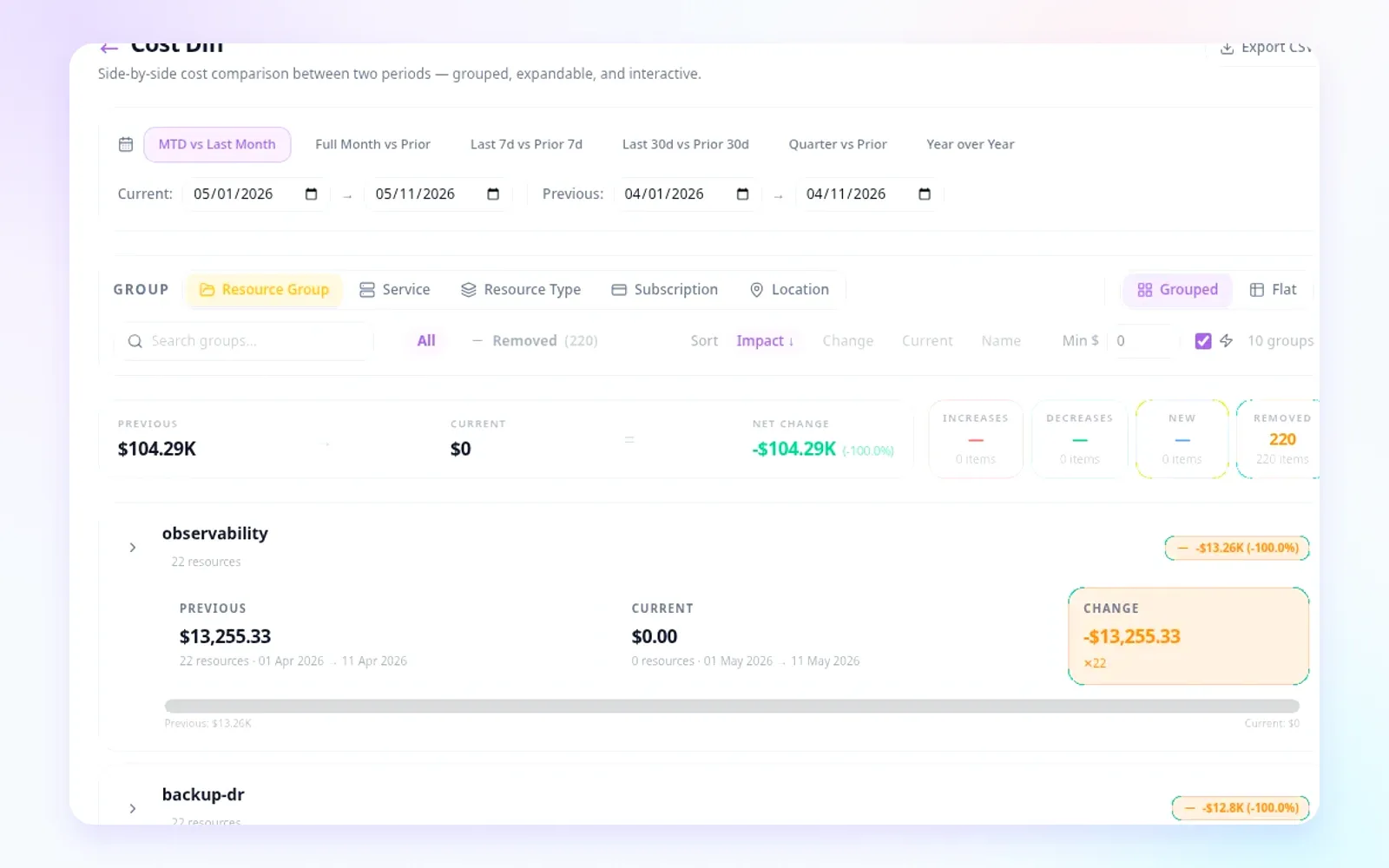
Align cost comparison with retained synchronized states.
Inspect related resources and services in the selected scope.
Carry the supported explanation into assigned work or reporting.
Accountability
Implemented capabilitySubscription, grouping, tag, and resource context can help teams direct a cost question to the right operating owner. Completeness depends on source quality and the customer taxonomy; Lineage does not infer reliable ownership from missing metadata.
Filter the cost question to a meaningful estate boundary.
Use available organization and resource metadata for routing.
Assign validation or optimization work with a recorded status.
Decision support
Implemented capabilityThe AHUB and license surface helps teams organize relevant license and Azure Hybrid Benefit context for review. Eligibility, entitlement, pricing, and savings must be validated against current Microsoft terms and customer records before action.
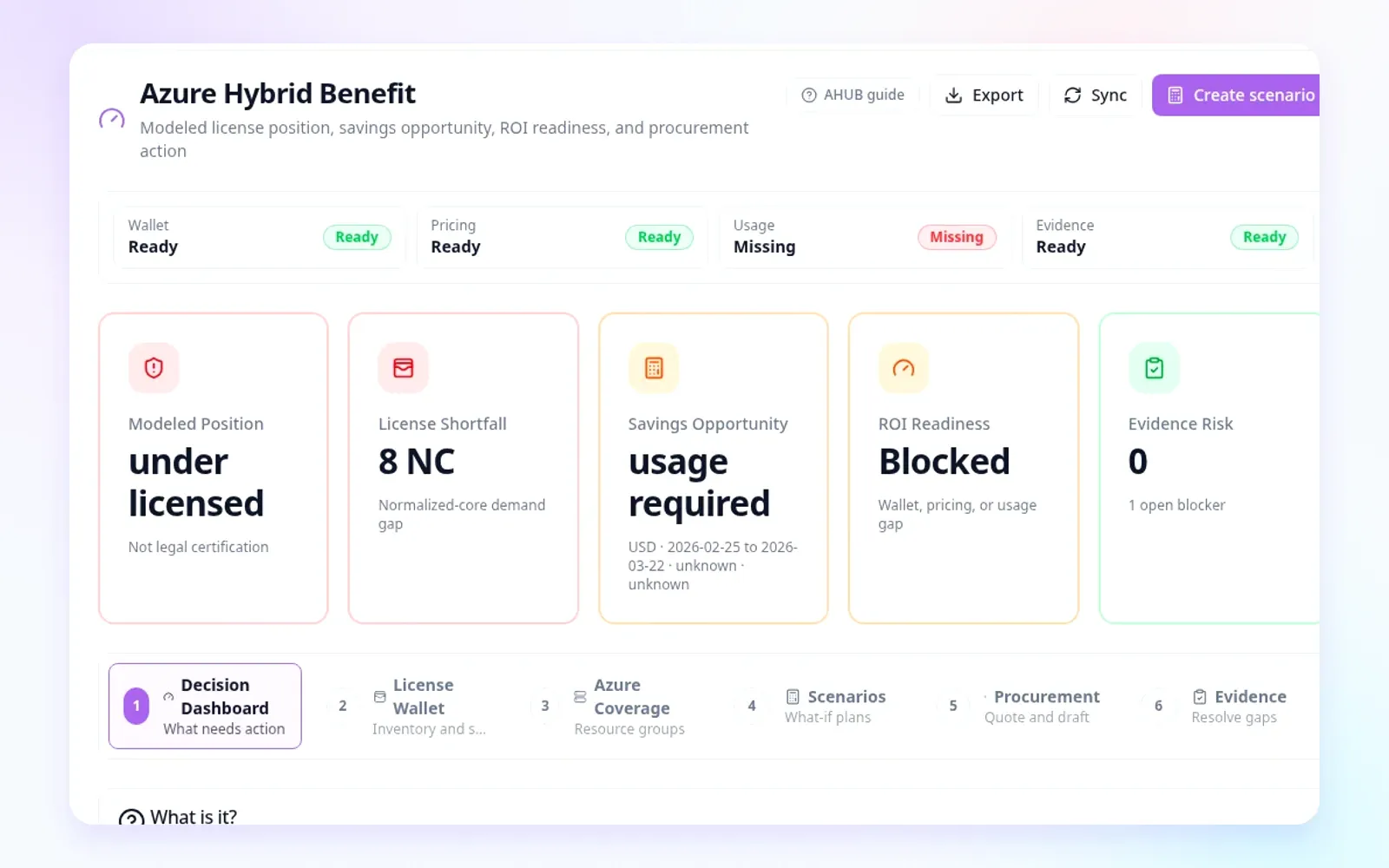
Decision workflow
Implemented capabilityCost findings can be assigned in Action Center and included in report material. This keeps recommendations, owners, status, and stakeholder communication connected to the investigation.
Assign a cost or usage check to an accountable owner.
Record status and review notes around the proposed action.
Package findings into recurring review output.
Service and advisory
Service and advisorySwaves can help frame allocation, optimization, planning, and review routines using Lineage evidence. Forecast accuracy, commitment strategy, realized savings, and operating ownership remain customer-specific and require validated commercial data.
Evaluate Lineage
Choose a review period and scope, then test whether estate history improves the explanation and follow-up.