
Isolation
Review tenant-aware access and administration boundaries.
Lineage trust
Trust is an account-specific assessment, not a badge implied by a marketing page.
Examine identity and access, tenant boundaries, audit surfaces, sync freshness, AI limits, and advanced action controls before rollout.
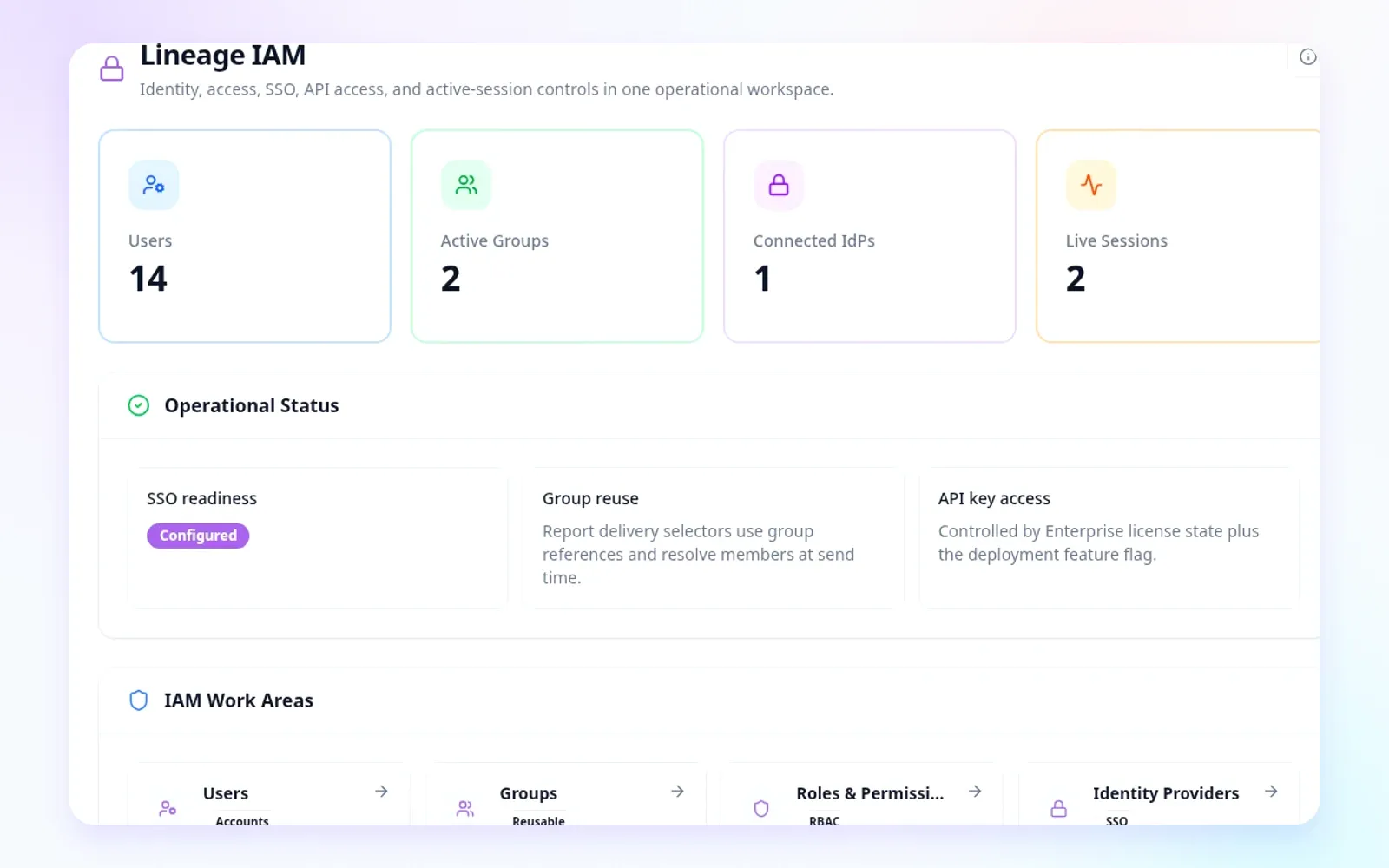
Lineage exposes product and administrative controls that support a trust review. This page does not claim a certification, universal compliance outcome, deployment residency, or security guarantee.
Administrative control
Implemented capabilityLineage includes administrative surfaces for roles, groups, permissions, SSO configuration, API keys, and active sessions. Exact authentication and identity integration depends on the configured account environment.
Architecture review
Operating practiceThe product is designed around tenant-aware application and data-access boundaries. A customer trust review should still document deployed topology, source connections, retention, backup, network paths, and the data visible to configured AI services.
Review tenant-aware access and administration boundaries.
Map source, storage, reporting, and model-routing paths.
Confirm retention, backup, restore, and deletion expectations.
Reviewability
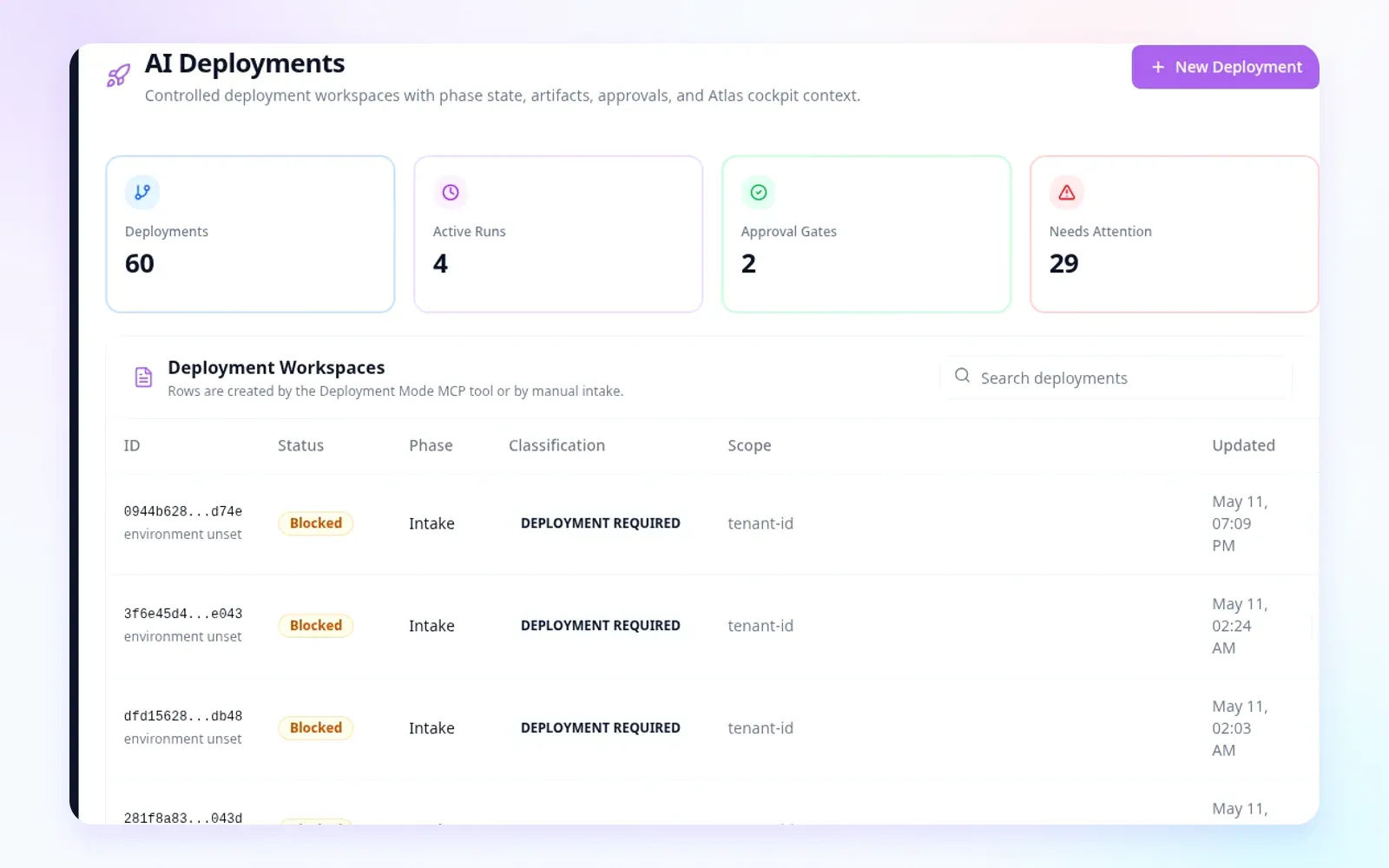
Implemented capabilityAudit and execution surfaces provide product evidence for account review. Coverage, retention, export, and integration with a customer's central logging or records systems must be verified for the deployed environment.
Operational trust
Implemented capabilitySync views expose configuration, progress, history, and status so reviewers can see whether relevant context is current, stale, failed, or still processing. Operational response and service levels are deployment-specific.
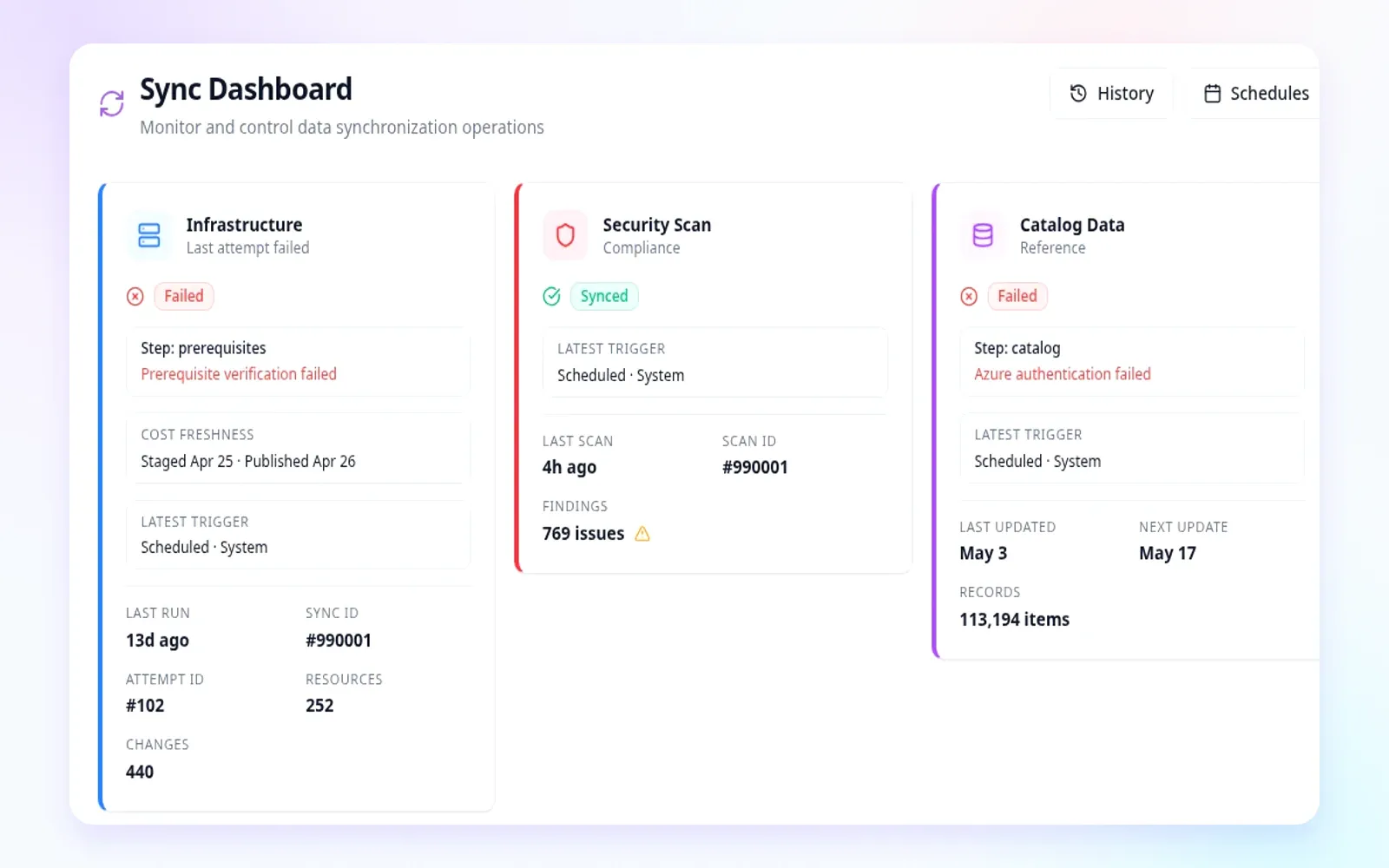
Inspect configured synchronization and current execution state.
Review prior runs and available failure context.
Use freshness as part of every consequential conclusion.
Separated authority
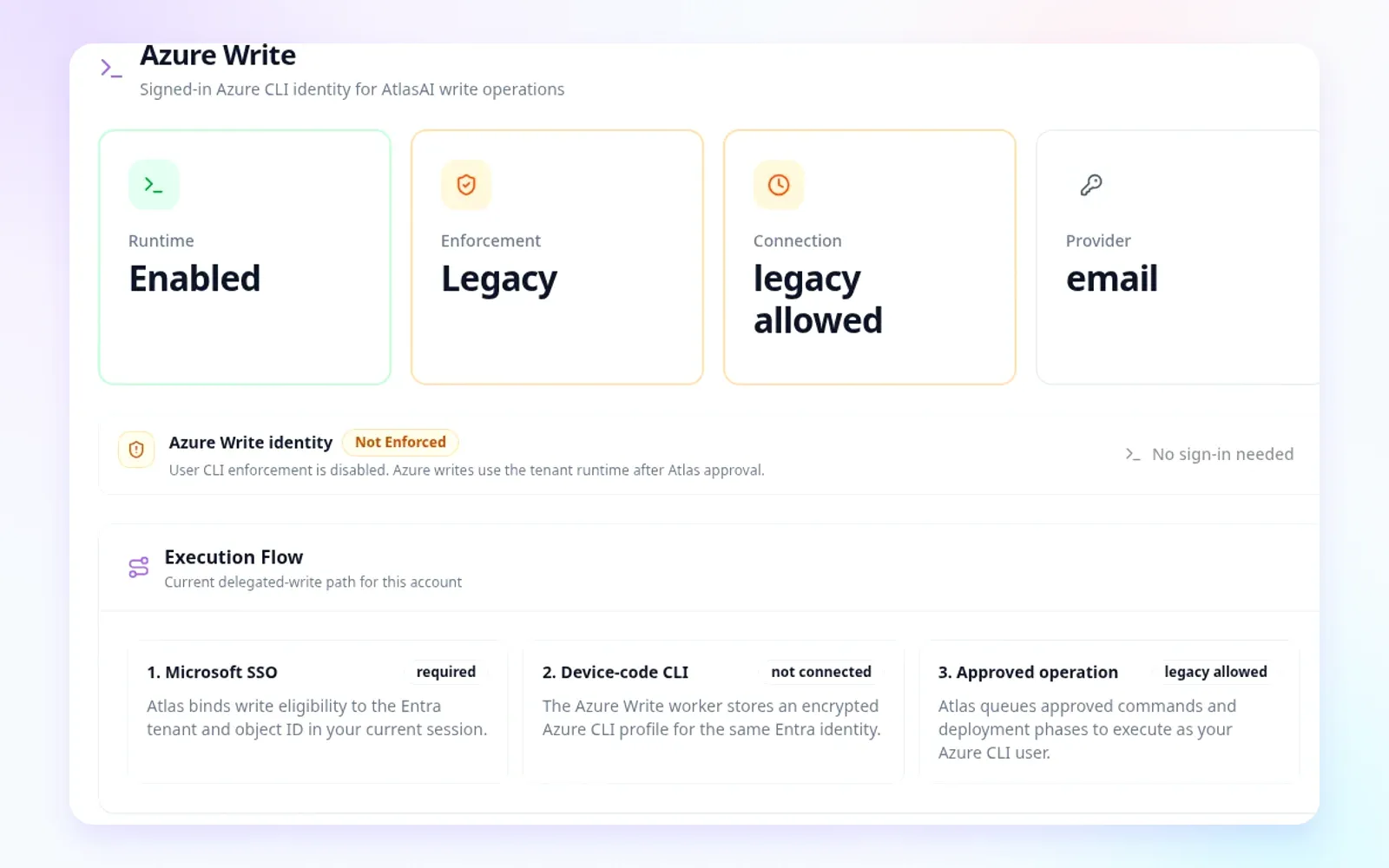
Implemented capabilityAtlas AI output requires human review. Where advanced write capabilities are enabled, customer identity, Azure RBAC, product permissions, policy, approval, execution, verification, and audit provide a separate operating path.
Service and advisory
Service and advisorySwaves can support architecture, permission, data-flow, control, backup, and operating-readiness review. Formal compliance opinions, certifications, penetration testing, contractual service levels, managed security, and residency commitments require separate evidence and scope.
Evaluate Lineage
Assess the configured environment, source permissions, data paths, operating controls, and evidence requirements before rollout.