Skip to content
Solutions
Company

Industry operating models

Start with the operating cycle that makes the business distinct.

Industry pathways combine the relevant applications, controls, master data and implementation scenarios without presenting one generic configuration as a finished vertical product.

ManufacturingDistributionServices and projectsMulti-location operations

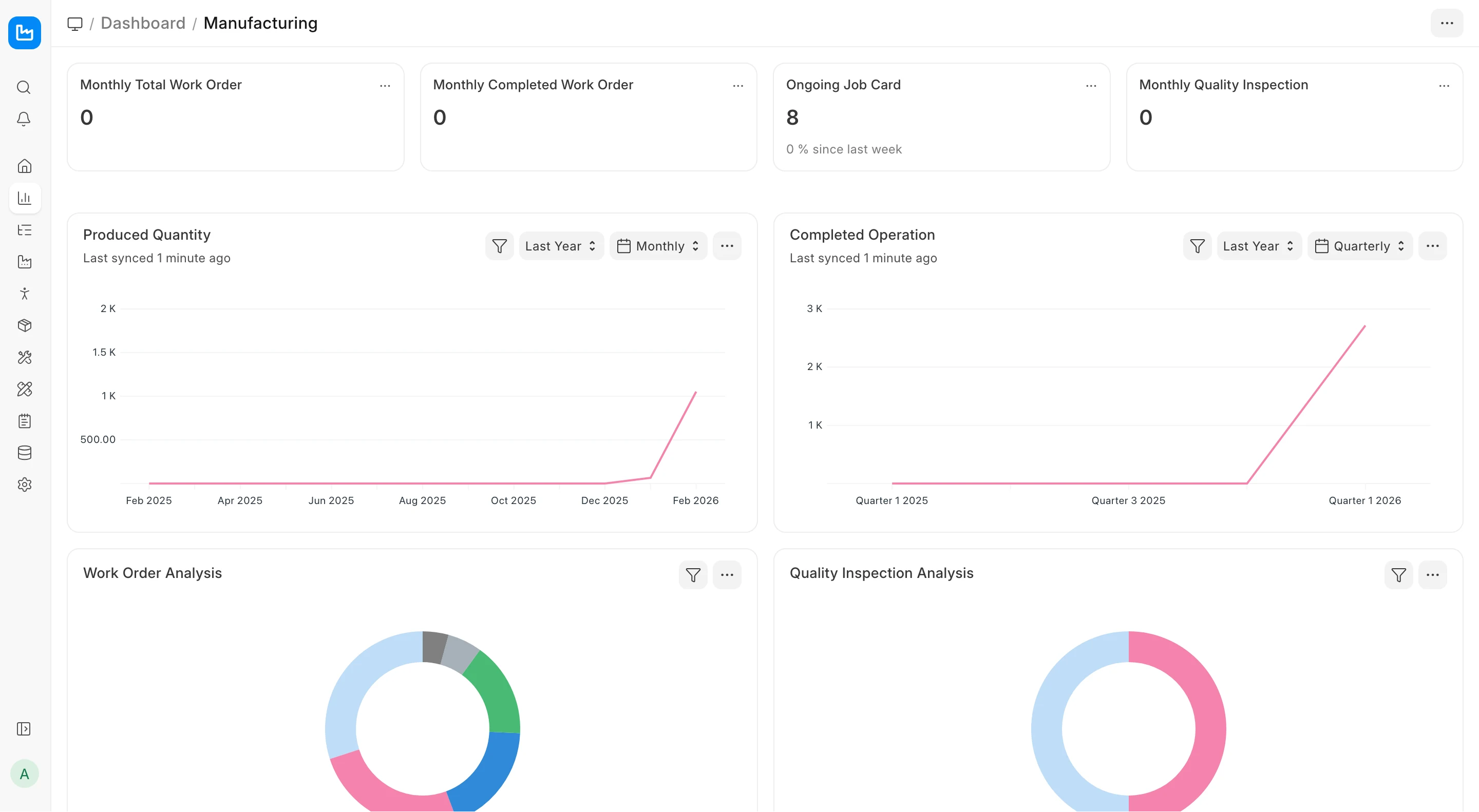
Actual application interface from the official module documentation; final configuration and scope are confirmed per deployment.

Manufacturing applicationManufacturing dashboard
ERPNext manufacturing dashboard with work-order, job-card, quantity and quality views
Actual application interface from the official documentation. View source · CC BY-SA.

Configured pathways

Common foundations. Different operating priorities.

Each pathway changes documents, roles, controls, reports and rehearsal scenarios—not only vocabulary.

01

Manufacturing

Connect demand, engineering masters, materials, production execution, inspection, finished stock and cost.

DemandPlanSourceProduceInspectReceiveCost
BOM and routing controlMaterial and capacity readinessWork-order progressQuality and traceability
Process manufacturing, formula or batch genealogy, regulated quality and advanced planning needs require additional fit assessment.
02

Trading & Distribution

Coordinate pricing, purchasing, availability, multi-location stock, fulfilment, returns, receivables and supplier liabilities.

ForecastBuyReceiveStoreSellDeliverCollect
Availability and replenishmentPricing and marginWarehouse movementOrder and collection status
Warehouse automation, transport planning, marketplace scale and advanced demand forecasting are qualified separately.
03

Professional Services

Connect opportunities, projects, people, time, expenses, milestones, billing and contribution.

QualifyProposePlanDeliverBillCollectReview
Pipeline to project hand-offResource and time captureProject cost and billingMargin and collection
Resource optimisation, professional-service automation depth and revenue-recognition policy require operating-model review.
04

Projects & EPC

Maintain the relationship between project structure, procurement, materials, contractors, site activity, billing and cost.

AwardPlanProcureMobiliseExecuteCertifyBill
Project and cost structureProject procurementMaterial movementProgress and billing evidence
Complex contract billing, quantity surveying, retention, claims and sector-specific project controls require detailed fit assessment.
05

Retail & Multi-location

Coordinate catalogues, pricing, location stock, purchasing, point-of-sale outcomes, returns and entity reporting.

RangeReplenishSellReturnSettleReconcile
Location and assortmentStock availabilitySales and returnsDaily settlement
Offline POS, fiscal devices, loyalty, high-volume retail and payment integrations depend on country and channel requirements.
06

Asset & Field Service

Connect installed assets, maintenance requirements, service requests, parts, technician work, billing and lifecycle cost.

RegisterPlanDispatchServiceConsumeBillReview
Asset identity and locationPreventive maintenanceService assignmentParts and billing
Route optimisation, offline field applications, IoT telemetry and sector-specific maintenance standards require separate solution design.

Configured pathways

Common foundations, different operational priorities.

Select a pathway to see the business cycles and evidence that should drive scope.

Country, sector and company-specific requirements are qualified before a vertical capability is presented as available.

Foundation and attribution

Open foundations. Swaves delivery accountability.

Swaves ERP solutions may use and extend established open-source business platforms, including the ERPNext and Frappe ecosystem, alongside Swaves configuration, integration and managed services. Capabilities and interface patterns shown here are referenced against current published module documentation. ERPNext and Frappe are trademarks of their respective owner. Swaves does not claim partner certification, endorsement or ownership of upstream products.

Start with the operating model

Bring the process that is losing control first.

Current companies, sites and systemsUsers, roles and approval authorityPriority process and known exceptionsMigration, statutory and integration requirements